

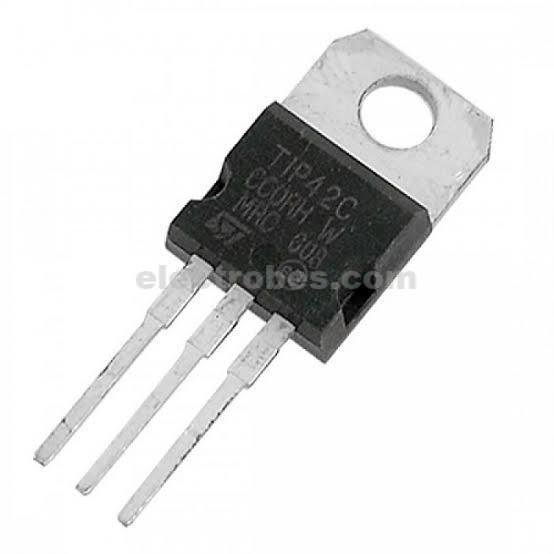
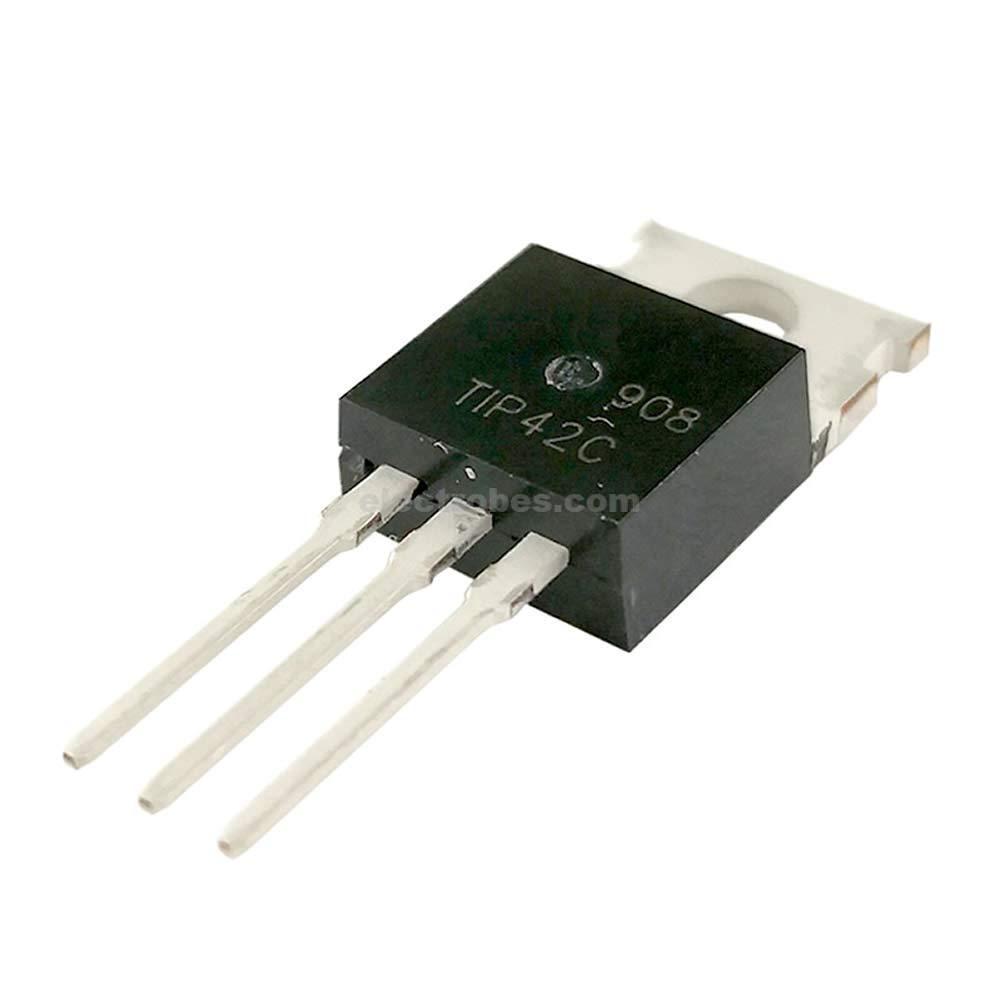
TIP42C Bipolar PNP Transistor
Power Transistors are transistors which can handle a lot more power in compared to BJTs. Similar to BJTs, the current flow between the collector and the emitter of is controlled by the current flow through the base. TIP42C is a PNP type semiconductor Bipolar high power Transistor. Collector-base voltage of 40V and Collector current of 6A. This type of semi-conductors are available online in Pakistan at electrobes.
In stock
₨ 30
In stock
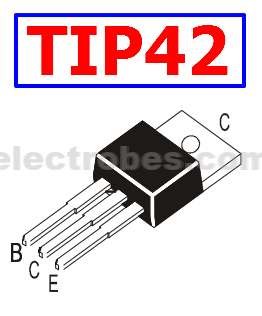
Pin configuration (Pinout) of the TIP42
Here is an image showing the pin diagram of the this transistor.

TIP42C Bipolar PNP Transistor
The TIP42C is a PNP bipolar junction transistor (BJT) designed for medium-power amplification and switching applications. It is commonly used in power supply circuits, audio amplifiers, relay drivers, and complementary transistor arrangements with an NPN transistor such as the TIP41C.
Description
The TIP42C is a three-terminal PNP power transistor with Emitter (E), Base (B), and Collector (C) terminals. A small current applied to the base controls a larger current flowing between the emitter and collector.
Pin Configuration
For the common TO-220 package:
| Pin | Terminal | Function |
|---|---|---|
| 1 | Base (B) | Controls transistor conduction |
| 2 | Collector (C) | Main current terminal |
| 3 | Emitter (E) | Main current terminal |
Note: Pin configuration can vary between manufacturers, so verify the specific datasheet before assembly.
Main Features
- PNP bipolar power transistor
- Three-terminal device
- Suitable for switching and amplification
- High collector-emitter voltage capability
- Available in TO-220 package
- Designed for medium-power applications
- Can be used as the complementary PNP device to TIP41C
- Suitable for audio and power-control circuits
Typical Specifications
| Parameter | TIP42C |
|---|---|
| Transistor type | PNP BJT |
| Package | TO-220 |
| Maximum collector-emitter voltage (VCEO) | −100 V |
| Maximum collector current (IC) | −6 A |
| Maximum collector power dissipation | 65 W with appropriate heat sinking |
| DC current gain (hFE) | Typically 15–75 |
| Collector-base voltage (VCBO) | −100 V |
| Emitter-base voltage (VEBO) | −5 V |
| Junction temperature | Up to approximately 150°C |
| Complementary transistor | TIP41C (NPN) |
Applications
- Power amplifiers
- Audio amplifier output stages
- Linear power supplies
- Voltage regulators
- Relay and motor drivers
- General-purpose power switching
- Complementary push-pull circuits
Basic Symbol
          C
          |
          |
         |/
B -------|    PNP
         |\
          |<--- E
          |
Important: The TIP42C can dissipate significant power. When operating at high current or voltage, an appropriate heatsink is required to prevent excessive junction temperature. Exact electrical ratings can vary slightly by manufacturer, so the datasheet for the specific component should be used for final circuit design.
- Type – PNP
- Collector-Emitter Voltage: -40 V
- Collector-Base Voltage: -40 V
- Emitter-Base Voltage: -5 V
- Collector Current: -6 A
- Collector Dissipation – 65 W
- DC Current Gain (hfe) – 15 to 75
- Transition Frequency – 3 MHz
- Operating and Storage Junction Temperature Range -65 to +150 °C
- Package – TO-220
Based on 0 reviews
Be the first to review “TIP42C Bipolar PNP Transistor”
You must be logged in to post a review.



There are no reviews yet.