

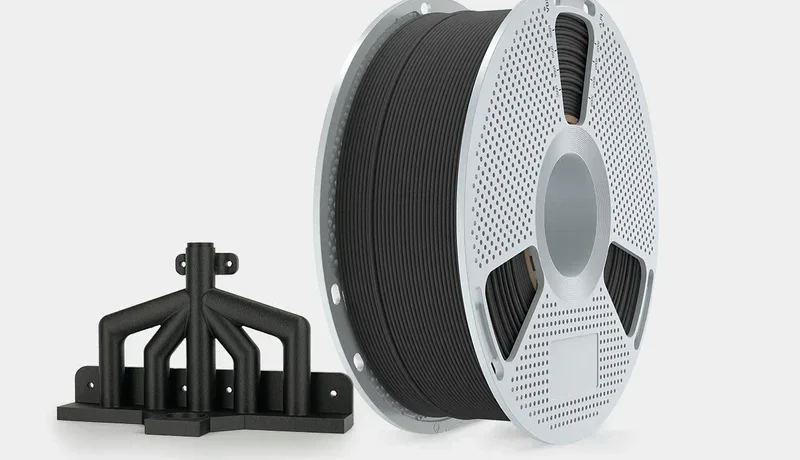
Bought a new 3D printer, or planning to? The filament you choose decides how strong, heat-resistant and good-looking your prints will be. PLA, PETG, ABS, ASA, nylon and carbon-fibre blends all behave differently, and Pakistan’s summer heat and monsoon humidity make the choice even more important.
This guide compares the most popular 3D printer filaments, explains when to use each one, and lists the print settings to start with.
Quick comparison
| Filament | Ease of printing | Strength | Heat resistance | Needs enclosure? | Best for |
|---|---|---|---|---|---|
| PLA | Very easy | Good, but brittle | Low (softens around 55–60°C) | No | Prototypes, models, decoration, learning |
| PETG | Easy | Tough, slightly flexible | Medium (around 70–80°C) | No | Functional parts, brackets, containers |
| ABS | Moderate | Tough, impact-resistant | High (around 95–100°C) | Yes | Car parts, enclosures, parts near heat |
| ASA | Moderate | Like ABS | High | Yes | Outdoor parts exposed to sun |
| Nylon (PA) | Harder | Very strong, wear-resistant | High | Recommended | Gears, hinges, mechanical parts |
| Carbon-fibre blends (PLA-CF, PA6-CF) | Moderate | Stiff and strong | Depends on base | Depends on base | Drone frames, jigs, rigid parts |
PLA: the best place to start
PLA is the easiest filament to print. It sticks well, barely warps and has almost no smell, which makes it perfect for beginners, students and models.
- Starting settings: nozzle 190–220°C, bed 50–60°C, cooling fan on.
- Watch out: PLA softens at around 55–60°C. A PLA part left on a car dashboard in a Pakistani summer can bend out of shape, so do not use it for parts that get hot.
Our EXYZ PLA 1.75mm (1kg) is a reliable everyday roll.
PETG: tough parts without the hassle
PETG is nearly as easy to print as PLA but much tougher and more heat-resistant. It is a great choice for functional parts like brackets, clips, cable holders and boxes.
- Starting settings: nozzle 230–250°C, bed 70–85°C, cooling fan low to medium.
- Tip: PETG sticks very strongly to smooth PEI and glass beds. Use a glue stick or textured plate so parts release without damaging the surface.
ABS and ASA: for heat and outdoor use
ABS handles heat and impact far better than PLA, which is why many car and appliance parts are made from it. ASA is similar but also resists UV light, so it does not turn yellow or brittle in the sun, ideal for outdoor fittings, signs and garden parts.
- Starting settings: nozzle 240–260°C, bed 90–110°C, fan low or off.
- Needs an enclosure: both shrink as they cool and can warp or crack in an open printer. They also give off fumes, so print in a ventilated room.
See EXYZ ASA and EXYZ PC-ABS for high-performance parts.
Nylon and carbon-fibre: engineering-grade strength
Nylon (PA) is extremely strong and wear-resistant, perfect for gears, hinges and parts that move. Carbon-fibre filaments add short fibres to PLA or nylon, making parts much stiffer and lighter.
- Dry it first: nylon absorbs moisture from the air within hours, and wet nylon prints weak and stringy. During the monsoon this is a real problem. A filament dryer pays for itself quickly.
- Use a hardened nozzle: carbon-fibre and other filled filaments are abrasive and wear out brass nozzles fast. Use a hardened steel nozzle or extruder, such as the Bambu Lab hardened steel extruder.
Popular options: EXYZ Easy PA Nylon, EXYZ PLA-CF and EXYZ PA6-CF.
Storing filament in Pakistan’s climate
Most filaments slowly absorb moisture, and wet filament causes popping sounds, bubbles, stringing and weak layers. To keep your rolls printing well:
- Keep opened rolls in a sealed box or zip bag with silica gel.
- Dry PETG, nylon and other moisture-sensitive filaments before printing, especially in July to September.
- Keep spools away from direct sunlight and hot rooftops.
Which filament should you buy first?
- New to 3D printing: start with PLA.
- Printing practical parts: add PETG.
- Parts that get hot or go outdoors: ABS or ASA, with an enclosed printer.
- Mechanical and engineering parts: nylon or carbon-fibre blends, with a dryer and hardened nozzle.
Frequently asked questions
Is 1.75mm or 2.85mm filament better?
Most modern printers, including Bambu Lab and Creality machines, use 1.75mm filament. Check your printer’s specifications; you cannot use one size in a printer built for the other.
Can I print ABS on an open printer?
Small parts sometimes work, but larger ABS prints usually warp or split without an enclosure. An enclosed printer gives far more reliable results.
Why are my prints stringy?
The most common cause is moist filament, followed by a nozzle temperature that is too high. Dry the filament first, then lower the temperature in 5°C steps.
Shop 3D printing supplies in Pakistan
Browse our full range of 3D printer filaments, FDM 3D printers and 3D printer parts, with delivery across Pakistan.
